
What do you want to learn more about?
Nourished through Treatment™
(Active Treatment Only)
The Signature VIP 1:1



If you’ve landed here, you’ve probably asked the question “does soy increase estrogen” or heard “soy causes cancer.” Maybe someone told you to avoid soy altogether after a hormone-positive cancer diagnosis (maybe a friend, maybe even your oncologist!). Maybe you’ve stood in the grocery aisle holding a carton of soy milk, wondering if the thing you’ve been drinking for years has been quietly working against you.
I get it. When you’ve been through breast cancer — or you’re in the thick of treatment right now — the last thing you want is to unknowingly hand your body more of the very hormone your care team is working to lower. That fear is real, and it deserves a real answer, not a shrug.
As a hormone-positive breast cancer survivor myself, it’s really important to me that we take the question apart honestly. Not “soy is a miracle.” Not “soy is the enemy.” Just what the strongest human evidence actually shows. Let’s dive in.
A quick note before we go further: this is education, not medical advice. I’m sharing what the research says, not making a recommendation for your specific situation. Please bring any questions about soy, your diagnosis, or your medications to your oncology team and, ideally, a board-certified oncology dietitian who knows your full picture. 🌱
Answering honestly – “Does Soy Increase Estrogen?” Two extremes — and why they’re both wrong
Soy might be the most argued-about food in the cancer-nutrition world. And the loudest voices sit at two opposite poles. It seems as though what often wins lately is simply what is shouted the loudest versus the actual science.
On one side: soy is a hormonal hand grenade. Some say it’s “basically estrogen,” it feeds tumors, and any woman who’s had a hormone-sensitive cancer, or anyone who wants to reduce their breast cancer risk, should avoid it like the plague.
On the other: soy is a superfood that single-handedly slashes recurrence, and you should be eating it by the block.
Both are wrong. The truth — as it so often does — lives in the honest middle. And the middle here is actually reassuring, which is exactly why it’s worth staying with.
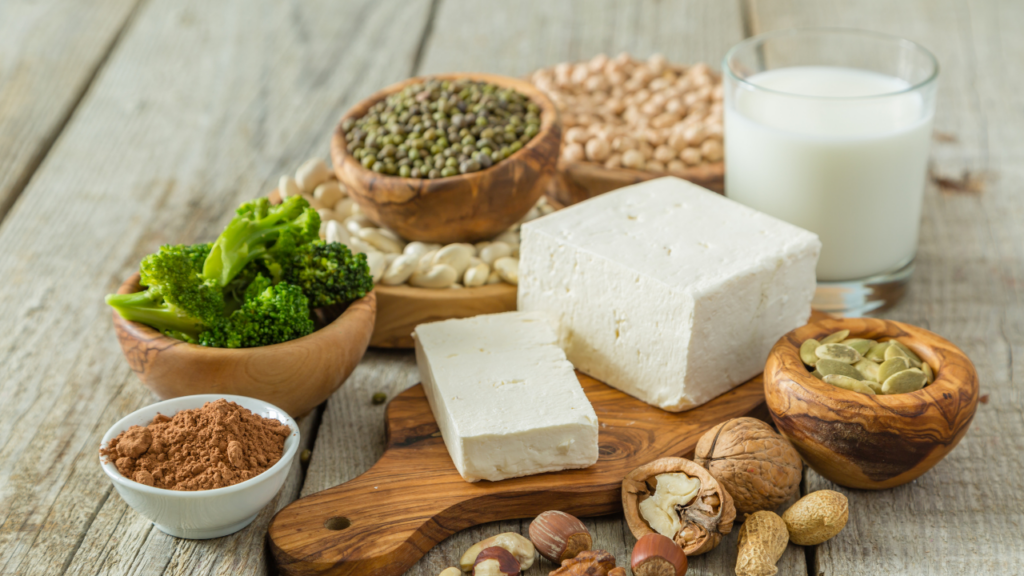
What are phytoestrogens, actually?
Here’s where the fear starts, so let’s clear it up first.
Soy contains compounds called isoflavones — mainly genistein and daidzein. These belong to a family called phytoestrogens (phyto just means “plant”). They’re called that because, under a microscope, their structure looks a lot like our own estrogen (17-β-estradiol, the main estrogen in the body).
And that’s the whole root of the panic. Looks like estrogen, must act like estrogen. It’s a reasonable worry. It’s also not how the body works.
Think of it this way: estrogen is a key, cut to fit one very specific lock — the estrogen receptor on your cells. When the real key slides in and turns, the lock opens fully and the cell gets the message. Isoflavones are a decoy key. They’re shaped similarly enough to slip into the same lock, but they barely turn it. And here’s the part that matters most: when your body’s estrogen is high, that weak decoy key can sit in the keyhole and get in the real key’s way — blocking the signal instead of sending it. For estrogen-receptor-positive survivors especially, that’s the direction you want things moving.
Scientists have a name for compounds that behave like this — they’re selective estrogen receptor modulators, or SERMs. That means they can act like a very weak estrogen when your own estrogen is low, and like a blocker of estrogen when your levels are high. (If “SERM” rings a bell, it might be because tamoxifen — a common breast cancer medication — is also a SERM. More on that shortly.)
So the question isn’t really “does soy contain something estrogen-like?” It clearly does. The question is: does soy increase estrogen circulating in your body? That’s what we can measure. So let’s look.

Does soy increase estrogen? Here’s what the human trials show
This is the heart of it, so I want to give you the real numbers.
The most rigorous evidence we have is a 2025 systematic review and meta-analysis of 40 randomized controlled trials — the highest tier of evidence, where soy is actually assigned and measured rather than just asked about on a survey. Pooling 52 comparisons across more than 3,200 postmenopausal women taking a median of 75 mg of isoflavones a day (this is about 3 servings of traditional soy foods), it found no statistically significant effect on any measure of estrogen activity — not estradiol, not FSH, not endometrial thickness [2].
Similarly, an earlier review of 47 studies found the same story in both pre- and postmenopausal women: no significant change in estradiol [3]. And a large 2021 technical review of over 400 reports concluded that soy foods and isoflavones don’t even warrant being classified as endocrine disruptors — they don’t adversely affect estrogen levels, breast or uterine tissue, or thyroid function [1].
The big, rigorous picture is clear. Does soy increase estrogen? No. There is no meaningful increase. And a few tightly controlled feeding studies even nudged hormones the other way — one saw estradiol drop around 25% [4]. That’s a smaller, less consistent signal, so I won’t oversell it as “soy lowers your estrogen.” But sit with the direction for a second, because it’s the exact opposite of the fear. The food you were told might flood you with estrogen does not raise it.
Does soy milk increase estrogen?
Same answer, and this one comes up so often it’s worth saying plainly: soy milk doesn’t behave any differently. Yes, it’s processed a bit (or, rather “smartly processed” as I like to say)— but it’s still considered a whole-soy food, and it delivers the same isoflavones the trials studied. In fact, there’s no evidence a glass of it raises your estrogen. So if soy milk is how you enjoy soy, go for it: alongside those potentially protective isoflavones, you’re getting plant protein and calcium — and more calcium still in the fortified versions.
“But I have a hormone-positive cancer — is soy safe for me?”
This is the real question under all the others, isn’t it? Because general reassurance is nice, but you need to know about your body, with your diagnosis.
So let me name my hats here. As an oncology dietitian, I follow the strongest human evidence we have — and I’ll walk you through it. As a hormone-positive cancer survivor myself, I understand the instinct to remove anything that even might be a risk. I’ve felt it. When it’s your own body on the line, “probably fine” doesn’t feel like enough.
Here’s the good news: for soy, we have better than “probably fine.” We have large studies in actual breast cancer survivors, and they don’t just show safety — several show benefit.
- The Shanghai Breast Cancer Survival Study followed more than 5,000 women with early-stage breast cancer. The women eating the most soy had lower recurrence and lower mortality than those eating the least — and that held for ER-positive tumors and for women taking tamoxifen [5].
- The After Breast Cancer Pooling Project combined nearly 9,500 US and Chinese survivors. Higher post-diagnosis soy intake was linked to a 25% lower risk of recurrence [7].
- A US study concluded, in plain terms, that clinicians no longer need to advise women against soy [6].
In short, that’s not one promising outlier. That’s a consistent signal across tens of thousands of women. And it’s why both the American Cancer Society and the NCCN survivorship guidelines now state that moderate soy food intake — up to about three servings a day — is safe for survivors and associated with reduced recurrence [10][11].
What about tamoxifen or aromatase inhibitors?
A fair worry: if I’m on endocrine (hormone) therapy, could soy interfere with it? The prospective data say no. In the Shanghai study, soy’s benefit showed up in tamoxifen users and non-users, with no sign that soy blunted the medication [5]. Reviews looking specifically at this question found no evidence soy compromises tamoxifen [9].
A Summary of the Research
Study | Scope | Key finding (in plain language) | Reference |
|---|---|---|---|
| Qiu & Jiang (Eur J Nutr, 2019) | 12 studies, 37,275 women | Women who ate more soy were less likely to have their breast cancer come back, and were more likely to be alive over time. The benefit was strongest in women past menopause. | [1] |
| CUP Global / WCRF (Becerra-Tomás, IJC 2023) | Post-diagnosis diet review | Soy (isoflavones) was linked to a lower chance of cancer returning. Evidence points in a helpful direction but isn’t yet definitive. | [1] |
| Song et al. (Nutr Cancer, 2023) | 14 studies + new group of patients | Eating more soy was tied to a lower chance of cancer coming back and a lower chance of dying. More soy generally meant more benefit. | [2] |
| Fritz et al. (PLoS ONE, 2013) | 131 articles (40 clinical trials) | Soy caused no harm. It did not raise estrogen levels in the blood and did not interfere with the breast cancer drug tamoxifen. | [3] |
| Mauny et al. (Cancers, 2022) | 7 high-quality studies since 2009 | No study found soy to be harmful. Several found it helpful—including in women whose cancer is fueled by hormones. | [4] |
The honest caveats regarding “does soy increase estrogen?”— and there are real ones
If I stopped here, I’d be doing the “soy is a miracle” thing I told you I wouldn’t. So here’s what the evidence does not show, out loud:
Nearly all of the survivor data is observational. These are studies that follow people over time and spot patterns — they’re powerful, but they can’t prove cause and effect the way a randomized trial can. We don’t yet have a large randomized trial with recurrence as the endpoint, and researchers are right to keep calling for one.
The benefit is tied to whole soy foods — not supplements. Tofu, edamame, tempeh, soy milk: that’s what these studies measured, at moderate amounts. Concentrated isoflavone pills and powders are different. High-dose supplements haven’t been shown safe the same way, and some experts still advise against them, especially on tamoxifen [10]. Just like always, aim to get your nutrients through food. Always aim to get your soy from your plate, not a capsule.
“Moderate” means moderate. The benefit in these studies plateaued at a reasonable intake — roughly two to three servings a day. More isn’t necessarily better here. You don’t need to force soy in; you just don’t need to fear it.
So, what can you actually do? (Where the real estrogen levers live)
Here’s the reframe I most want you to walk away with — because it hands you back some control.
If your worry is estrogen and hormone-sensitive cancer, soy is safe to keep on your plate — and it can be a lever to reduce your risk. However, there are other factors that genuinely move the needle and they’re largely within reach. This is where a nutrition and lifestyle pattern actually earns its keep for reducing recurrence risk — with real relevance for women’s hormonally-driven cancers:
- Body composition is your biggest dietary estrogen lever. Here’s a fact that surprises almost everyone: fat tissue isn’t just storage, it’s an estrogen factory. It runs on an enzyme called aromatase, which converts other hormones into estrogen. If that word looks familiar, it’s because of a whole class of breast cancer drugs — aromatase inhibitors (anastrozole, letrozole, exemestane) — whose entire job is to block that enzyme and lower estrogen. So this isn’t a fringe idea: shrinking excess fat tissue works on the same pathway your medication may already be targeting, just from the other direction. It’s one reason carrying excess body fat is linked to higher recurrence risk in hormone-positive breast cancer — and why supporting a healthy body composition does more to influence your estrogen than avoiding any single food ever could.
- Lean plant-predominant. A nutrition pattern built mostly around vegetables, fruit, whole grains, beans, nuts, and yes — soy — is the one most consistently tied to better outcomes after cancer. Not because any one food is magic, but because the whole pattern has been found to be protective.
- Fiber pulls its weight — literally. Fiber helps your body escort used estrogen out (via your GI tract 💩) rather than recirculating it, alongside everything else it does for blood sugar and the gut.
- Move your body most days. Physical activity is one of the most consistent signals in all of survivorship research for lower recurrence and better survival.
- Be honest about alcohol. Alcohol is one of the clearer dietary risk factors for breast cancer and recurrence. This isn’t about perfection or never celebrating — it’s about knowing that this is a real lever, in a way soy simply isn’t.
Ultimately, the things that actually shape your estrogen and your recurrence risk are these. In other words, that’s not bad news. That’s agency. Control the controllables.
The dual lens on “does soy increase estrogen” and cancer risk
As an oncology dietitian, my read of the evidence is clear: whole soy foods are safe for breast cancer survivors — including hormone-positive ones — and may modestly lower recurrence risk. I’m comfortable saying that because the human data, taken together, genuinely support it.
As a survivor myself, here’s where I land: I want every anti-tumorigenic property I can reasonably get, and I don’t want to spend my energy fearing a food that the best science says is on my side. There’s enough that’s genuinely hard about life after cancer. This doesn’t need to be one of the hard things.
Here’s my own honest place in all this: I didn’t grow up eating soy. No tofu, no edamame, no tempeh — none of it. So when the soy-and-estrogen worry of “does soy increase estrogen?” comes up, I always think, well, soy certainly wasn’t raising my risk, because it simply wasn’t on my plate to begin with. I wasn’t a plant-predominant eater, either. Tofu and soy foods were genuinely new to me — a little intimidating, if I’m honest.
And now? Soy milk and tofu are staples for my whole family — not just me. My kids gobble up soy milk and tofu. Funny how the food I once knew nothing about became one I reach for on purpose.
Is soy safe for my son — and the men in my family?
If your kids are drinking soy milk now (like mine are), or your husband won’t touch tofu because he heard it’s “a feminizing food” this one’s for you.
In short, the myth is that soy feminizes males — lowers testosterone, raises estrogen, the whole “man boobs” worry. It runs on the same misunderstanding we untangled above: looks like estrogen, must act like estrogen. And like most of the soy panic, it traces back to rodent and petri-dish studies that don’t carry over to humans, because our bodies handle isoflavones very differently than a mouse does [1]. Remember the decoy key — it works the same way in a male body.
For grown men, the evidence is about as settled as nutrition gets. An updated meta-analysis of 41 studies — measuring testosterone in over 1,700 men — found that neither soy nor its isoflavones significantly affected testosterone, estrogen, or SHBG, no matter the dose or duration [14]. Soy foods behave like food, not like a hormone.
Likewise, for boys, the picture is just as reassuring. A prospective study of more than 2,600 boys found higher soy intake linked to slightly later puberty — the opposite of the “estrogenizing” fear the myth predicts [16].
Broader reviews of childhood soy find no adverse effect on hormones or development, and even hint that soy earlier in life may be tied to lower breast cancer risk down the road [15].
So yes — soy milk on the cereal, edamame in the lunchbox, tofu at dinner is fine for the boys and men you love. Same rule as everyone else: whole soy foods in normal amounts, not mega-dosed isoflavone supplements. 🌱
New to soy? Here’s how to start
If soy has never been part of your kitchen — like it wasn’t part of mine — you don’t need to overhaul anything. A few easy entry points go a long way:
- Make soy milk your default. The simplest swap there is: pour it on cereal or oatmeal, blend it into a smoothie, splash it in your coffee. One choice, made once, and you’re there. Aim for unsweetened, organic soy milk.
- Keep edamame in the freezer. Steam a handful, add a little salt, done. It’s the lowest-effort way to snack your way into soy, and it doesn’t ask you to cook anything new.
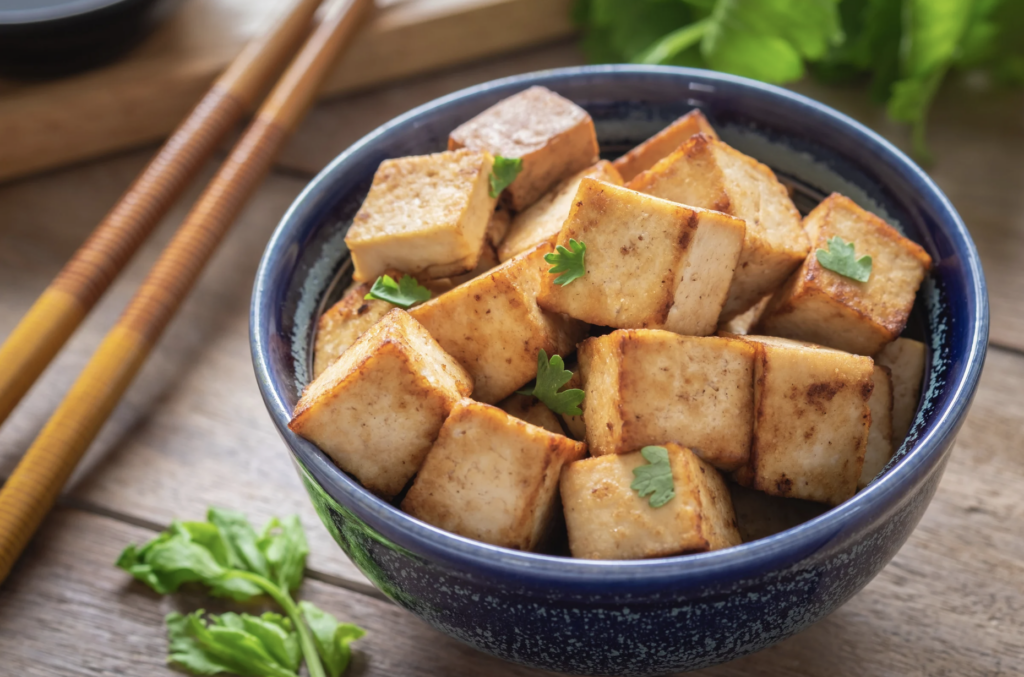
- Let tofu in through the side door. Tofu intimidates a lot of people (including me!). My Sofritas Tacos are the recipe I jokingly call the gateway to tofu — big flavor, familiar format, none of the “what do I even do with this block” panic. Start there and the rest gets easier.
- Level up when you’re ready. Tempeh (nuttier, firmer) and miso (a savory, fermented paste for soups and dressings) are lovely next steps once soy feels like home — no rush.
One note on sourcing: where you can, reach for organic soy. Most conventional soy is genetically modified and treated with pesticides, and choosing organic is a simple way to lower that exposure — the same low-toxin thinking I bring to the rest of my plate. It’s a “better when you can” nudge, not another rule to feel behind on.
👉 [Link to Sofritas Tacos recipe.]

If the soy fear had a cousin, it’s the sugar fear
Here’s what I’ve noticed after years of these conversations: the woman who’s afraid of soy is very often the same woman who’s afraid of fruit, afraid of a birthday slice of cake, convinced that sugar is “feeding” her cancer. It’s the same fear wearing different clothes — a food I love is secretly working against me.
That one deserves the same honest, science-first untangling soy just got. So I wrote a blog post and went deeper in a free guide: Sugar Without Fear. If the relief you feel right now — the permission to stop fearing a food — is something you want more of, that’s where I’d send you next.
👉 [Download Sugar Without Fear here.]

The bottom line
Does soy increase estrogen? No — the strongest human evidence shows it doesn’t meaningfully raise your estrogen, and for breast cancer survivors, moderate whole-soy foods are safe and may even lower recurrence risk. In the end, the fear was reasonable. The facts are reassuring. And the things that actually shape your risk are bigger, and mostly yours to influence.
Here’s to reducing the fear, and stepping back into the driver’s seat with the facts.
With you in this! 💪
In Good Health,
Alison
References
- Messina M, Mejia SB, Cassidy A, et al. Neither Soyfoods Nor Isoflavones Warrant Classification as Endocrine Disruptors: A Technical Review of the Observational and Clinical Data. Critical Reviews in Food Science and Nutrition. 2021.
- Viscardi G, Back S, Ahmed A, et al. Effect of Soy Isoflavones on Measures of Estrogenicity: A Systematic Review and Meta-Analysis of Randomized Controlled Trials. Advances in Nutrition. 2025.
- Hooper L, Ryder JJ, Kurzer MS, et al. Effects of Soy Protein and Isoflavones on Circulating Hormone Concentrations in Pre- and Post-Menopausal Women: A Systematic Review and Meta-Analysis. Human Reproduction Update. 2009.
- Lu LJ, Anderson KE, Grady JJ, Kohen F, Nagamani M. Decreased Ovarian Hormones During a Soya Diet: Implications for Breast Cancer Prevention. Cancer Research. 2000.
- Shu XO, Zheng Y, Cai H, et al. Soy Food Intake and Breast Cancer Survival. JAMA. 2009.
- Caan BJ, Natarajan L, Parker B, et al. Soy Food Consumption and Breast Cancer Prognosis. Cancer Epidemiology, Biomarkers & Prevention. 2011.
- Nechuta SJ, Caan BJ, Chen WY, et al. Soy Food Intake After Diagnosis of Breast Cancer and Survival: An In-Depth Analysis of Combined Evidence From Cohort Studies of US and Chinese Women. American Journal of Clinical Nutrition. 2012.
- Qiu S, Jiang C. Soy and Isoflavones Consumption and Breast Cancer Survival and Recurrence: A Systematic Review and Meta-Analysis. European Journal of Nutrition. 2019.
- Fritz H, Seely D, Flower G, et al. Soy, Red Clover, and Isoflavones and Breast Cancer: A Systematic Review. PLoS One. 2013.
- Rock CL, Thomson CA, Sullivan KR, et al. American Cancer Society Nutrition and Physical Activity Guideline for Cancer Survivors. CA: A Cancer Journal for Clinicians. 2022.
- National Comprehensive Cancer Network. Survivorship (NCCN Clinical Practice Guidelines). Updated 2026.
- Becerra-Tomás N, Balducci K, Abar L, et al. Postdiagnosis Dietary Factors, Supplement Use and Breast Cancer Prognosis: CUP Global Systematic Literature Review and Meta-Analysis. International Journal of Cancer. 2023.
- Song S, Cheun JH, Moon HG, et al. Dietary Isoflavone Intake and Breast Cancer Prognosis: A Prospective Analysis and Meta-Analysis. Nutrition and Cancer. 2023.
- Reed KE, Camargo J, Hamilton-Reeves J, Kurzer M, Messina M. Neither Soy Nor Isoflavone Intake Affects Male Reproductive Hormones: An Expanded and Updated Meta-Analysis of Clinical Studies. Reproductive Toxicology. 2021.
- Messina M, Rogero MM, Fisberg M, Waitzberg D. Health Impact of Childhood and Adolescent Soy Consumption. Nutrition Reviews. 2017.
- Xiong J, Xu Y, Liu X, et al. Prospective Association of Dietary Soy and Fibre Intake With Puberty Timing: A Cohort Study Among Chinese Children. BMC Medicine. 2022.

Alison Tierney, MS, RD, CD, CSO
Alison is a registered dietitian, board-certified in oncology nutrition, and a cancer thriver. Her expertise in oncology nutrition and personal experience with her own cancer diagnosis and its treatment provide her with the unique perspective of being able to relate to her clients on an entirely different level. Her content is consistently focused on evidence-based guidelines and seeks to increase the awareness of the power of nutrition to complement traditional cancer therapies.
Leave a Reply
Featured Articles
This website provides educational information but it is not a substitute for medical advice from a licensed medical professional who is familiar with your particular facts and circumstances. The information contained on this website is not intended to diagnose, treat, or cure any disease and shall not be construed as medical advice. The information and education on this website is provided for you to use at your own discretion.
You can further review our disclaimer here.

Be the first to comment