
What do you want to learn more about?
Nourished through Treatment™
(Active Treatment Only)
The Signature VIP 1:1


Does Fasting During Chemotherapy Improve Effectiveness and Reduce Side Effects? (And What I Learned Living It)
If you’ve landed here, you’re probably somewhere in the same place I once was — sitting with a chemo or cancer treatment schedule, wondering if there’s anything within your control that could help your body handle treatment better. I get that question a lot, from clients and from my own inbox. And I’ve lived it myself, as a cancer survivor who used fasting during chemotherapy.
So let’s talk about what the research actually says about fasting and chemotherapy — not the watered-down, “just eat clean” version, and not the overhyped, “fasting cures cancer” version either. The real answer sits somewhere in the middle: early clinical trials show real promise, especially in breast cancer, but the evidence isn’t strong enough yet for any major oncology guideline to recommend fasting as standard practice. That nuance matters, and I’m not going to skip over it just because “fasting beats cancer” makes a punchier headline.
A quick note before we start: Fasting during chemotherapy is not a DIY project, and it is not right for every person or every treatment plan. Everything in this article is for education — not a recommendation for you specifically. Please talk with your oncology team and a board-certified oncology dietitian before trying anything you read here. Read our Website Terms of Use and Disclaimer.
What Do We Mean by “Fasting and Chemotherapy”?
This phrase gets used loosely, so let’s clear it up:
- Short-term fasting (STF) — water-only fasting for roughly 24–72 hours, timed around a chemo or cancer treatment infusion.
- Fasting-mimicking diets (FMDs) — a plant-based, very low-calorie eating pattern (roughly 25–50% of normal intake) for 3–5 days around treatment. You’re still eating something — just very little, and very specifically.
- Intermittent fasting (IF) — cycling between eating and not-eating windows, most often used for general weight management. This is not the same protocol studied around chemotherapy, and it’s an important distinction, because IF and clinical short-term fasting are built for different goals.
- Time-restricted feeding (TRF) — eating within a set window each day (say, 8–10 hours), typically used between treatment cycles rather than on treatment days.
Different tools, different purposes. Conflating them is where a lot of the confusion — and a lot of unsafe self-experimentation — comes from.
The Science: Why Fasting Might Affect Cancer Cells and Healthy Cells Differently
Here’s the theory, and it starts with a basic difference in how cancer cells fuel themselves — how they take in energy and put it to use.
Most cancer cells are metabolically rigid — a phenomenon called the Warburg effect. Instead of being able to flexibly switch fuel sources — for example, glucose (sugar) or fat — the way healthy cells can, tumor cells lean hard on glucose, almost like a factory that’s only ever been built to run one machine. When glucose becomes scarce, healthy tissue can shift over and start burning fat instead. Cancer cells often can’t make that switch the same way.
That rigidity is the whole reason fasting and chemotherapy is even being studied here. Two things happen at once when you fast, and researchers have given each one its own name.¹

Healthy Cells Build a Shield: Differential Stress Resistance
When nutrients become scarce, healthy cells sense it and respond by pulling back — down regulating the internal signals that normally tell them to grow and divide, and redirecting that energy toward maintenance, repair, and defense instead. It’s a bit like a plant pulling its energy back into its roots during a dry spell: not dying, just conserving and protecting until conditions improve. Researchers call this shift differential stress resistance (DSR), and it’s the mechanism believed to help healthy tissue tolerate chemotherapy’s toxic effects better.¹ ²
Cancer Cells Can’t Follow: Differential Stress Sensitization
Cancer cells, because of that Warburg-effect rigidity, largely can’t make the same move. Their growth-signaling pathways tend to be stuck in the “on” position — often because of the very mutations that make them cancerous in the first place. So when nutrients drop and chemotherapy hits at the same time, cancer cells are caught with no ability to downshift and protect themselves. Researchers call this differential stress sensitization, and it’s the proposed reason chemotherapy may hit tumor cells harder during a fasting window, while sparing healthy tissue more than it otherwise would.¹

What’s Actually Happening at the Cellular Level
Growth Signals Go Quiet: IGF-1, Insulin, and the Akt/mTOR Pathway
When you eat, insulin and a related growth hormone called IGF-1 rise — and together, they flip on an internal cell signaling pathway (researchers call it PI3K/Akt/mTOR) that essentially tells your cells: grow, divide, don’t self-destruct. Think of it as your cells’ gas pedal for growth. Cancer cells frequently hijack this pathway and leave it pressed to the floor.
Fasting drops insulin and IGF-1, which quiets this growth pathway — including a specific piece of it called Akt. This matters because researchers can actually measure it: two biomarkers, p-Akt (how active the growth pathway is) and Ki-67 (how many cells are actively dividing), are used in tumor tissue to check whether an intervention is genuinely turning down a tumor’s growth engine, not just theoretically.¹ ³ Lower p-Akt and Ki-67 after treatment is one of the clearest signals researchers look for as evidence this mechanism is holding up outside the lab.
Related Post: Keto vs. Plant-Based: Which Diet it Better for Cancer Patients?
Autophagy: Your Cells’ Built-In Recycling Crew
One of the most consistent effects of fasting is triggering autophagy — literally “self-eating” or programmed cell death — the process your cells use to break down and clear out damaged proteins and worn-out internal structures. Low nutrient availability is one of the strongest natural signals for autophagy to switch on. In healthy tissue, this cellular “recycling crew” may help clear out damage that accumulates during chemotherapy and support cellular repair in the tissue that needs to recover between treatments.¹ ²
Protecting Your Mitochondria: The Oxidative Stress Connection
Your mitochondria are your cells’ power plants — and chemotherapy is hard on them. It generates oxidative stress: a buildup of unstable molecules that damage cells and contribute to fatigue and cumulative strain on organs like your heart and kidneys.
In preclinical research, fasting has been shown to support the growth of new, healthier mitochondria (a process called mitochondrial biogenesis) and strengthen the body’s antioxidant defenses. The theory is that this helps buffer healthy tissue against some of that oxidative damage — one proposed reason patients may tolerate treatment better over time. I want to be transparent that this piece of the science is still largely mechanistic and preclinical; solid human confirmation is still catching up.² ³
Immune Remodeling: NK Cells, T-Cells, and a System “Reboot”
Fasting doesn’t just affect tumor and healthy tissue metabolism — it appears to reshape immune activity too. A phase Ib trial found that fasting-mimicking diets were associated with reduced levels of immunosuppressive cell populations (including regulatory T-cells, which can dampen the immune system’s ability to attack tumors) and enhanced activity of CD8+ T-cells and NK cells — your immune system’s frontline hunters for abnormal cells.⁴ There’s also evidence that periodic fasting may help protect hematopoietic stem cells — the cells responsible for producing new blood and immune cells — which may be part of why some patients describe their immune system feeling like it “resets” between fasting cycles.¹
What the Clinical Trials Actually Show
This is the part most articles and conversations on this topic skip, and it’s the part that matters most — because mechanism is not the same as proof. Some of the trials below actually measure the biomarkers we just talked about — p-Akt, Ki-67, glucose, IGF-1 — directly in tumor tissue, to see whether the mechanism holds up in real patients, not just cell cultures.
The encouraging signals:
- The DIRECT trial (phase 2, 131 women with HER2-negative breast cancer) found that adding an FMD to neoadjuvant chemotherapy was linked to higher radiological response rates and better pathologic response, with no increase in toxicity.⁵
- The BREAKFAST trial (phase 2, early triple-negative breast cancer) found strong pathologic complete response rates when a cyclic FMD was paired with preoperative chemo — and used early downmodulation of tumor glycolysis (essentially, the tumor’s glucose-burning activity slowing down) as a biomarker to predict who would respond best.⁶
- A subanalysis of the NCT03340935 trial in advanced triple-negative breast cancer found longer median overall survival in patients who added an FMD to carboplatin-based chemo (30.3 vs. 17.2 months) — though this was a subanalysis, not the trial’s primary result, and needs confirmation in larger studies.⁷
- A phase Ib trial confirmed FMD safety across various cancer types and directly measured favorable shifts in blood glucose and immune activity, including reduced immunosuppressive cell populations and enhanced T-cell response — the same immune remodeling we walked through above, observed in actual patients.⁴
The honest caveats — and there are real ones:
- A 2026 randomized phase II trial in breast and prostate cancer did not meet its primary toxicity endpoint, though severe (grade ≥3) toxicities trended lower in the fasting group (3% vs. 10%).⁸ Only 66% of patients completed at least 3 of the planned fasting cycles — adherence is genuinely hard.
- Two separate meta-analyses found no statistically significant reduction in overall chemotherapy toxicity with fasting interventions, even though some studies suggested benefits in specific areas like fatigue and quality of life.⁹ ¹⁰
- Systematic reviews consistently conclude that fasting appears safe and feasible in well-nourished patients, but that the evidence for clear benefits on treatment outcomes or side effects is still limited.¹¹ ¹²
- Most of the strongest clinical data comes from breast cancer patients specifically — we can’t assume the same results apply to every tumor type, including colorectal cancer (also called bowel cancer) or others.
- Studies vary widely in fasting length (anywhere from 24 to 140 hours), which makes it hard to compare results or say definitively “this is the protocol that works.”¹²
- No major oncology guideline currently recommends fasting or FMDs as standard care during chemotherapy. Trials like the ongoing CHRONO trial are still working to answer these questions — and a larger, phase III trial (DIRECT2) is now underway to confirm the original DIRECT trial’s findings in a bigger group of breast cancer patients.¹³ ¹⁴
So — does fasting improve chemotherapy effectiveness? The honest answer: early-phase trials show real, exciting signals at both the biomarker level and in outcomes like response rate, particularly in breast cancer — but we’re not yet at the point where any oncologist is handing out a fasting protocol as routine care. That’s exactly why this needs to happen with your medical team, not around them.
Fasting Isn’t Right for Everyone
I want to say this as plainly as I can: fasting during active cancer treatment is a clinical decision, not a wellness trend. Across the trials, consistent exclusion criteria show up again and again:¹⁵
- BMI under 18.5, or any degree of malnutrition
- Insulin-treated diabetes or other conditions affecting blood sugar regulation
- Pregnancy or breastfeeding
- A history of disordered eating
- Risk of cachexia or unintentional weight loss
The Risks are Real
The risks are real: nutritional deficiencies, electrolyte imbalances (particularly potassium and magnesium, which affect heart rhythm). Additionally— in a mismanaged immune system — even bacterial sepsis is possible. Muscle loss is a risk, but the research here is more nuanced than a flat yes-or-no.
In a Chinese recipe-based FMD trial in breast cancer patients, muscle mass held steady while fat mass and visceral fat dropped.¹⁶ But a separate body composition analysis in patients with advanced solid cancers on a cyclic FMD found the opposite — a significant drop in skeletal muscle index and a rise in sarcopenia rates over repeated cycles, which led researchers to call for routine sarcopenia screening before starting FMD protocols.¹⁷ The difference likely comes down to who’s fasting, how many cycles, and how closely it’s monitored. This is exactly why this isn’t a one-size-fits-all decision. Weight loss during fasting protocols, even mild ones, still shows up in the research and sometimes requires nutrition support between cycles to correct.¹⁸ This is why medical supervision isn’t a suggestion — it’s the whole point.
An oncologist and clinical dietitian, more specifically a board certified oncology dietitian if available, needs to assess your nutritional status, labs, and treatment plan before any fasting protocol is even on the table.
Restrictive eating during cancer treatment can also carry real emotional weight — especially for anyone with a history of disordered eating, or anyone for whom “food rules” during an already frightening season feel like one more source of anxiety rather than control.¹⁹ This is part of why the decision belongs in conversation with your full care team.

What the Fast Itself Might Feel Like
Separate from your chemo side effects, the fasting protocol itself can cause its own — usually mild — symptoms. Across trials, the most common are nausea (6–30%), fatigue (9–20%), headache (about 20%), and abdominal pain (about 20%).¹⁶ ²⁰ Serious (grade 3+) side effects from fasting itself are rare, affecting fewer than 6% of patients.¹⁶
One crossover study found that mouth soreness and weakness were lower during fasting cycles than non-fasting ones. This is a reminder that some of what you’re feeling during treatment is the chemo, not the fast. (15) Your care team can help you sort out which is which as you go.
My Own Experience Fasting Through Weekly Chemo
I’ll share what I can — and I want to explain why I’m holding some of it back.
I’m not going to tell you my exact protocol or which drugs I was on. Not because I’m trying to gatekeep, but because fasting protocols have to be individualized — to your treatment regimen, your health history, your nutrition status, your body. If I hand you my specific plan, someone reading this might assume it’s their plan too, and that’s exactly the kind of unsupervised guessing that makes fasting risky. What worked for me was built for me.
What I can tell you: I had weekly chemotherapy, and I went into it prepared. I’d already spent years working with oncology patients on fasting, so I came to my first oncology consult with research printed out and ready to go. Before that appointment, I’d also consulted with two oncology dietitian colleagues to make sure my approach held up against their clinical judgment, not just my own.
My oncologist happened to be a former colleague of mine. When I showed up ready to make my case, he simply said, “Alison — I trust you. I know you know the research, and I know how you practice. ” Certainly, I recognize that’s not the experience most patients have, and I don’t take that for granted. I still informed my full oncology team and stayed in close contact with my dietitian colleagues throughout.

Is Fasting During Chemotherapy Hard? My Personal Opinion
Was it hard? Yes. Genuinely hard. Looking back now, there are moments I think, how did I actually do that? But I was deeply motivated — I wanted to give my treatment its best shot at working, and I wanted to protect my quality of life as much as I possibly could. Knowing the research carried me. That motivation carried me.
The first day of fasting was always the hardest for me. Oddly, treatment day itself felt easier — I was so mentally occupied with appointments and cold capping (more on that in this post 🌱) that I barely noticed. And the last day of the fast felt easiest of all — maybe because I knew I was about to eat again, or maybe because of what the research says is happening physiologically by that point. Honestly, the day after chemo was one of my most productive workdays, period.
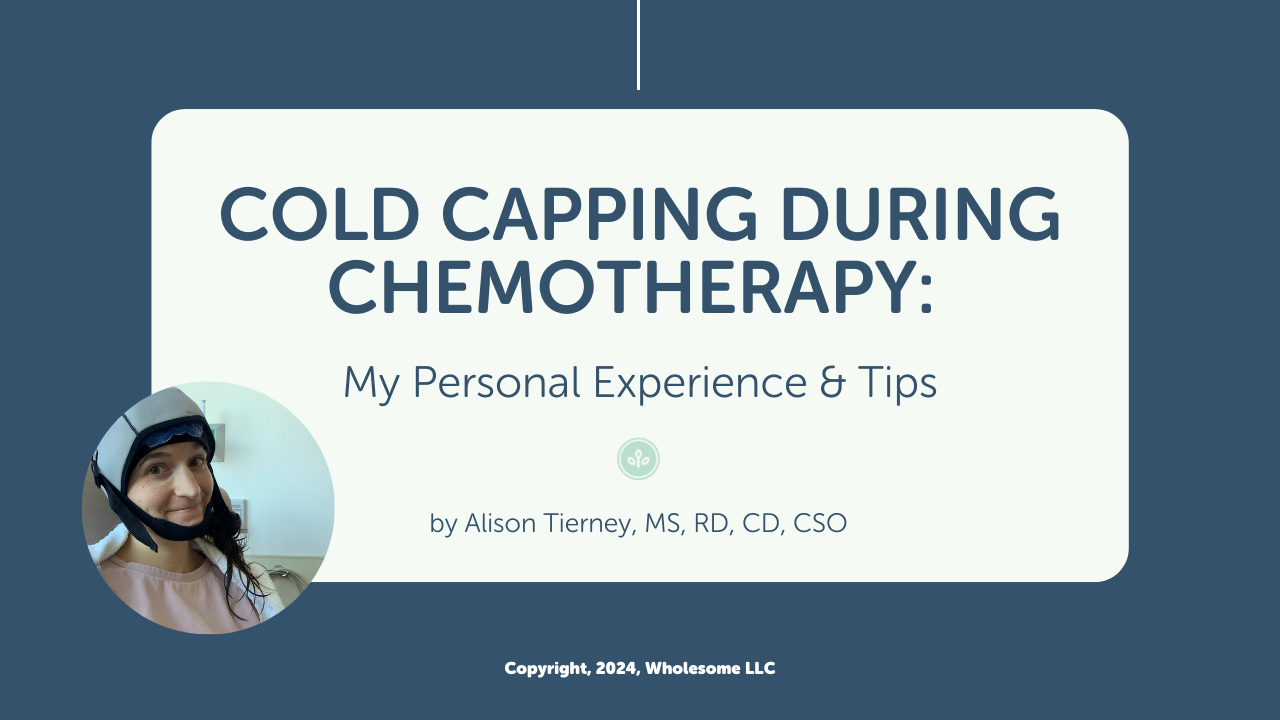
Related Post: Cold Capping During Chemotherapy: My Personal Experience & Tips
What I Want You to Know About Fasting and Chemotherapy
Here’s what I want you to know if you’re standing where I stood: cancer is hard. Treatment is hard. Fasting is hard, too — and so is cold capping, if that’s part of your plan (linked above). But for me, fasting became one of the few things I actually got to control in a season where control felt scarce. I was choosing my hard. I was controlling the controllables. If I had to go through it all again, I would — without hesitation. I’ve even built a modified version of fasting into my own survivorship routine now.
If you’re interested in fasting and your oncologist says no, I’d gently encourage you to go deeper into that conversation rather than dropping it. Ask what specifically concerns them — your labs, your weight trend, your treatment protocol — and share what you’ve learned. Sometimes “no” is really “not yet, let’s talk more.” Advocating for yourself, respectfully and with real information, is part of patient-centered care too.
Questions to Ask Your Oncology Team Before You Consider Fasting During Chemotherapy
- Is my current weight and nutritional status stable enough to consider this?
- Does my specific chemotherapy protocol have any research behind fasting or FMDs — or is it untested territory?
- What labs would you want to monitor before, during, and after a fasting window?
- Are there medications (like dexamethasone) that might need to be adjusted around a fast?
- Who on my care team would help monitor me throughout — my oncologist, a clinical dietitian, both?
- What would make you say “stop” if I were mid-fast?
Nourishing Your Body Between Fasting Windows
If fasting is part of your plan, what you eat between cycles matters just as much. This is where a nutrient-dense, plant-forward healthy diet does its quiet work — replenishing protein and micronutrients, supporting body composition, and helping your body recover before the next round.
Physical activity — even gentle movement — helps preserve muscle mass during this process. And don’t underestimate the emotional side. Processing the psychological weight of treatment, whether through a peer-to-peer support network, spiritual care, or telehealth support, is just as much a part of getting through this well as anything on your plate.
Quick Answers to Common Questions Regarding Fasting and Chemotherapy
Is fasting safe during chemotherapy?
It appears safe and feasible for well-nourished patients under medical supervision, based on current trials. It is not safe for patients who are underweight, malnourished, or at risk of muscle loss.
Does fasting improve chemotherapy effectiveness?
Some early-phase trials — particularly in breast cancer — show improved response rates and, in one subanalysis, longer survival. Larger trials haven’t consistently confirmed a reduction in overall chemo-related toxicity. The evidence is promising but not yet conclusive.
What’s a fasting-mimicking diet (FMD)?
A structured, plant-based eating pattern providing roughly 25–50% of normal calorie intake for 3–5 days around a chemotherapy cycle — different from water-only fasting and different from everyday intermittent fasting.
Can I just try intermittent fasting instead?
Standard intermittent fasting (used for weight management) hasn’t been studied the same way as short-term fasting or FMDs timed around chemo. Talk to your oncology team before assuming it’s equivalent.
How do I know if I’m a candidate?
Only your oncology team and a board-certified oncology dietitian can determine that, based on your labs, weight history, treatment protocol, and overall health.
You Don’t Have to Figure This Out Alone
If you’re navigating what to eat — or whether fasting has a place in your treatment — you don’t have to piece it together from blog posts and internet searches. That’s exactly why I built Nourished Through Treatment™, my 3-month virtual 1:1 oncology nutrition program for people who are newly diagnosed, preparing for treatment, or currently in active treatment.
We’ll look at your full picture — diagnosis, treatment plan, labs when relevant, symptoms, preferences, and goals — and build a plan that’s actually yours. And yes, if it’s appropriate for your situation and your oncology team is on board, we can explore fasting or fasting-mimicking approaches together, carefully and safely.
[Apply for Nourished Through Treatment™ →]
References
- Nencioni A, Caffa I, Cortellino S, Longo VD. Fasting and Cancer: Molecular Mechanisms and Clinical Application. Nature Reviews Cancer. 2018.
- Sadeghian M, Rahmani S, Khalesi S, Hejazi E. A Review of Fasting Effects on the Response of Cancer to Chemotherapy. Clinical Nutrition. 2021.
- Xie Y, Ye H, Liu Z, et al. Fasting as an Adjuvant Therapy for Cancer: Mechanism of Action and Clinical Practice. Biomolecules. 2024.
- Vernieri C, Fucà G, Ligorio F, et al. Fasting-Mimicking Diet Is Safe and Reshapes Metabolism and Antitumor Immunity in Patients With Cancer. Cancer Discovery. 2022.
- de Groot S, Lugtenberg RT, Cohen D, et al. Fasting Mimicking Diet as an Adjunct to Neoadjuvant Chemotherapy for Breast Cancer in the DIRECT Trial. Nature Communications. 2020.
- Ligorio F, Vingiani A, Torelli T, et al. Early Downmodulation of Tumor Glycolysis Predicts Response to FMD in Triple-Negative Breast Cancer (BREAKFAST Trial). Cell Metabolism. 2025.
- Ligorio F, Lobefaro R, Fucà G, et al. Adding FMD to First-Line Carboplatin-Based Chemotherapy Is Associated With Better Overall Survival in Advanced TNBC: NCT03340935 Subanalysis. International Journal of Cancer. 2024.
- Shelechi M, Tsao-Wei D, Pinski J, et al. A Randomized Phase II Clinical Trial of a Fasting-Mimicking Diet Prior to Chemotherapy. Journal of Clinical Oncology. 2026.
- Liu X, Meng Q, Fan W, Ning L, Ge L. Effects of Intermittent Fasting on Chemotherapy-Related Toxicity in Gynecological and Breast Cancer Patients: Systematic Review and Meta-Analysis. BMC Cancer. 2025.
- Abene J, Tyburski S, Kral TVE, Quinn R, Deng J. Diet as an Adjunct Therapy in Reducing Chemotherapy Toxicities: Systematic Review and Meta-Analysis. Nutrition and Cancer. 2025.
- Maes J, Durieux V, Liebmann M, Salmon M, Preiser JC. Impact of Intermittent Fasting on Patients With Cancer Undergoing Chemotherapy and/or Targeted Therapies: Systematic Review. Supportive Care in Cancer. 2025.
- Drexler U, Dörfler J, von Grundherr J, Erickson N, Hübner J. Fasting During Cancer Treatment: A Systematic Review. Quality of Life Research. 2023.
- Salvy SJ, Figueiredo JC, Atkins KM, et al. The CHRONO Trial: Protocol for a Randomized Controlled Trial of Early Time-Restricted Eating in Patients With Breast or Rectal Cancer. Nutrition Research. 2026.
- Gruil N, Liefers G, Schagen S, et al. DIRECT2: A Randomized Phase III Trial With a Fasting-Mimicking Diet Program to Improve Chemotherapy in Patients With Hormone Receptor Positive, HER2-Negative Breast Cancer. Journal of Clinical Oncology. 2023.
- Zorn S, Ehret J, Schäuble R, et al. Impact of Modified Short-Term Fasting and a Fasting Supportive Diet During Chemotherapy on Chemotherapy-Induced Toxicities. BMC Cancer. 2020.
- Xue M, Zhang N, Dong X, et al. The Feasibility and Safety of Fasting-Mimicking Diet in Breast Cancer Patients With Chemotherapy in China. Breast Cancer Research and Treatment. 2025.
- Sposetti C, Ligorio F, Serino R, et al. Body Composition Modulations During Cyclic Fasting-Mimicking Diet in Patients With Advanced Solid Cancers. Journal of Clinical Oncology. 2025.
- Bozzetti F. Calorie Restriction in Cancer Patients Undergoing Chemotherapy: Facts, Phantasy or Misunderstanding. Clinical Nutrition. 2022.
- Da Prat V, Pravettoni G, Casirati A, et al. Anticancer Restrictive Diets and the Risk of Psychological Distress: Review and Perspectives. Cancer Medicine. 2024.
- Ghaddar F, Ahmed S, Kirsch B, et al. A Pilot Study Evaluating the Feasibility, Safety, and Compliance With a Fasting-Mimicking Diet in Patients With Metastatic Non-Small Cell Lung Cancer. Clinical Lung Cancer. 2026.

Alison Tierney, MS, RD, CD, CSO
Alison is a registered dietitian, board-certified in oncology nutrition, and a cancer thriver. Her expertise in oncology nutrition and personal experience with her own cancer diagnosis and its treatment provide her with the unique perspective of being able to relate to her clients on an entirely different level. Her content is consistently focused on evidence-based guidelines and seeks to increase the awareness of the power of nutrition to complement traditional cancer therapies.
Leave a Reply
Featured Articles

This website provides educational information but it is not a substitute for medical advice from a licensed medical professional who is familiar with your particular facts and circumstances. The information contained on this website is not intended to diagnose, treat, or cure any disease and shall not be construed as medical advice. The information and education on this website is provided for you to use at your own discretion.
You can further review our disclaimer here.

Be the first to comment